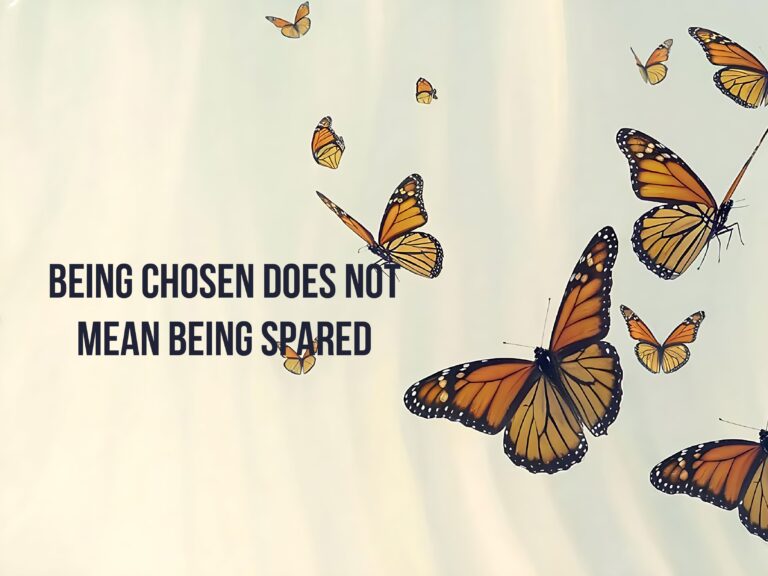
Being chosen does not mean life will be easy. In fact, many people who carry purpose experience deeper challenges, longer seasons of waiting, and moments of confusion that seem unfair. The ideology behind the book Chosen reminds readers that selection by God or destiny does not remove struggle; it gives struggle meaning. Being chosen often means being prepared through difficulty rather than protected from it.
From childhood to adulthood, many individuals wrestle with the question of why pain appears early in their lives. Adoption, abandonment, rejection, and uncertainty can feel like evidence of being forgotten. However, Chosen reframes these experiences as formative chapters instead of final judgments. The message is clear: purpose is often hidden inside experiences that initially feel like loss.
The idea of being chosen is not rooted in perfection but in positioning. Those who are chosen are not always the strongest or the most confident. Often, they are the ones shaped quietly, refined privately, and strengthened through endurance. The book illustrates how unseen preparation can later reveal a visible transformation. This truth encourages readers to stop interpreting hardship as disqualification.
Faith plays a central role in understanding chosen identity. Trusting God during uncertain times requires surrender, patience, and faith that transcends circumstances. In Chosen, faith is not portrayed as passive optimism but as active perseverance. The character learns to move forward even when answers are incomplete, demonstrating that obedience often precedes understanding.
Another powerful theme is identity formation. When someone grows up feeling different or displaced, identity can become fragile. The book addresses this vulnerability by reinforcing that identity does not come from background, biology, or societal labels. True identity comes from divine intention. Being chosen means being known completely and loved intentionally, regardless of origin.
Transformation in Chosen is symbolized through the cocoon and butterfly metaphor. Growth requires confinement, stillness, and time. Many people resist the cocoon stage because it feels restrictive, lonely, and slow. Yet the cocoon is essential for wings to form. The ideology teaches that isolation and waiting are not punishments but preparation.
The book also highlights the importance of spiritual mentorship and community. Parents, teachers, and faith leaders act as mirrors, reflecting truth when self-doubt tries to take control. Their encouragement reinforces that being chosen does not mean walking alone. Guidance becomes a stabilizing force when emotions and circumstances fluctuate.
Resilience is another core principle. Being chosen does not eliminate opposition. In fact, resistance often increases as progress becomes visible. Chosen addresses emotional, relational, and spiritual challenges that attempt to derail growth. The message is firm: opposition does not cancel purpose. It confirms its presence.
A key takeaway from the book is learning to remain obedient during success. Elevation can be as dangerous as adversity if humility is lost. Chosen emphasizes gratitude, service, and accountability even after achievement. Being chosen is not about superiority but responsibility.
Ultimately, the ideology of Chosen encourages readers to redefine success. Success is not measured by speed, recognition, or comfort. It is measured by faithfulness, growth, and alignment with purpose. Being chosen does not mean being spared from storms. It means being equipped to survive them and emerge transformed. This message resonates deeply in a world that glorifies ease and instant results. Chosen reminds readers that destiny unfolds through endurance. Those who are chosen may walk through fire, but they are never abandoned within it. Their story is not defined by what tried to break them but by what strengthened them.